
Information for patients
Summary of Safety and Clinical Performance (SSCP)
CCoat® Intra-articular injection
in accordance with Medical Device Regulation (EU) 2017/745
This Summary of Safety and Clinical Performance (SSCP) is intended to provide public access to an updated summary of the main aspects of the safety and clinical performance of the device. The information presented below is intended for patients or lay persons. A more extensive summary of its safety and clinical performance is prepared for healthcare professionals.
The SSCP is not intended to give general advice on the treatment of a medical condition. Please contact your healthcare professional in case you have questions about your medical condition or about the use of the device in your situation. This SSCP is not intended to replace an Implant card or the Instructions For Use to provide information on the safe use of the device.
1. Device Identification and General Information



Device trade name
CCoat®
Manufacturer’s name and address
The Manufacturer of this device is:
Liposphere Ltd
Ha’arava 1
Givat Shmuel
Israel 5400804
Basic UDI-DI
The basic UDI, for this medical device, as reported in Declaration of Conformity, 7290020168CCOATTL
Year when the device first CE-marked
2026
2. Intended use of the device
Intended purpose
The CCoat product is made to be injected right into the knee joint for people with mild to moderate knee arthritis. Once it‘s in the knee, it makes a thin, safe layer that covers the surfaces of the joint.
This helps the knee move more easily and can lessen the pain from the cartilage wearing out.
Indication and target
population
Who is this treatment for?
This treatment with CCoat is for adults aged 18 and older, both men and women, who have mild to moderate knee osteoarthritis (knee arthritis).
What is osteoarthritis?
Osteoarthritis is when the soft, cushion-like cartilage in the knee wears down over time. This can cause pain, swelling, and stiffness in the joint
Contraindications
Do not use this product if:
• The knee joint is infected, severely inflamed, or if there are skin diseases or infections near the injection site.
• You have ever had a serious allergic reaction to any of the ingredients in the product.
• You have already received an injection into the same knee within the past three months.
• You are younger than 18 years of age.
3. Device description
Device description and material / substances in contact with patient tissuesIntended purpose
CCoat is an injection (a shot) put directly into the knee joint. It has tiny fat-like particles called liposomes. Lab tests show that these particles coat the joint surfaces. In patients, this treatment helps the knee move more smoothly and feel less painful.
The product comes in a clean (sterile) glass vial with 4 ml of liquid for injection. A little extra liquid is added so the full dose can be taken out. A sterile needle is also included to draw the liquid from the vial before use.
An illustration of CCoat product is provided in Figure 2.
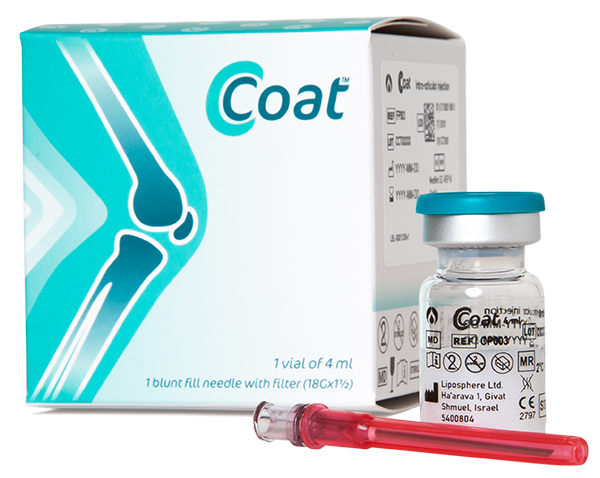 Figure 2: CCoat® vial and needle for preparation in packaging
Information about medicinal substances in the device, if any
This product does not have any medicine in it. It does not include blood or other materials from people or animals. It also does not use tiny particles called nanoparticles.
Description of how the device is achieving its intended mode of action
Lab tests show that CCoat creates a soft layer over the joint. Please note, this coating effect was only seen in lab tests. In patients, CCoat helps reduce knee pain and makes it easier to move. It has not been proven to stop cartilage from wearing down or to slow down your arthritis. It works by physical action only – it is not a medicine.
The main ingredient is called phospholipids. These are natural substances found in healthy joint fluid. The body breaks them down safely, and the leftover parts are not harmful.
The treatment works only in the knee where it is injected. It does not affect other parts of the body. Inside the knee, CCoat slowly breaks down over about three months and is fully absorbed by the body.
Lifetime:
CCoat is a temporary implant. After the shot, it slowly breaks down into harmless parts that are fully absorbed in about 3 months. You may feel less knee pain and move easier compared to before the shot for up to 6 months (26 weeks).
Description of accessories, if any
The CCoat vial comes with a clean needle that the doctor uses to take out the liquid. Before giving the shot in your knee, the doctor will change it to another regular clean needle, which is not in the box. This is the normal way doctors give injections.


4. Risks and warnings
It is very important to contact your healthcare professional if you believe that you are experiencing side effects related to the device or its use or if you are concerned about risks. This document is not intended to replace a consultation with your healthcare professional if needed.
How potential risks have been controlled or managed
The company that makes CCoat is Liposphere Ltd.
Liposphere looks for any problems (i.e. risks or side effects) that might happen when CCoat is used.
Liposphere then takes steps to reduce the chance of these problems happening as much as possible. They do this to make sure patients are safe.
Liposphere will continually look for risks or side effects linked to CCoat. This information can be found in a number of sources, including:
• Complaints data for CCoat
• Sales data for CCoat
• Literature and publications that report on the use of CCoat.
• Literature and publications about therapies for knee osteoarthritis (i.e., gradual wearing down of the joint cartilage) or products with similar fat-like particles called liposomes
Remaining risks and undesirable effects
The following adverse reactions have been reported in the literature or directly to CCoat:
• Pain, swelling, redness, bruising, warmth, or infection at the injection site
• Inflammation or infection inside the joint or in the surrounding tissues
• A temporary increase in joint fluid, which may cause discomfort or a feeling of tightness in the knee
• Signs of an allergic reaction, such as itching, skin rash, or, in very rare cases, a severe reaction (anaphylaxis)
• Rarely, bleeding inside the joint, irritation of nearby nerves, or damage to surrounding tissues
These are listed in the Instruction for Use (IFU) for CCoat. You can request the IFU for CCoat from your doctor.
Warnings and precautions
The precautions specifically provided to patients after CCoat injection are:
• Avoid heavy or strenuous activities such as tennis, jogging, or long walks for the first two days.
• It is common to have some temporary pain, swelling, or stiffness in the knee during the first week after the injection. These usually go away on their own. If your symptoms last longer than a week, contact your doctor.
• We haven‘t studied if this injection is safe or works well for pregnant or breastfeeding women.
These are listed in the IFU for CCoat. You can request the IFU for CCoat from your doctor.
Summary of any field safety corrective action, if applicable
The product‘s material is safe for MRI machines. Right after the injection (for about one day), CCoat may cause dark spots on the MRI pictures. This can make the pictures harder for the doctor to read.
There have been no safety alerts or recalls related to this product.
5. Summary of clinical evaluation and post-market
clinical follow-up
Clinical background
What is osteoarthritis and how is CCoat product used?
Osteoarthritis (OA) is the most common kind of arthritis. It causes pain and makes it hard to move, especially in older people. The knee is the joint most often affected.
OA happens when the smooth cartilage that covers the bones in the knee wears down over time. This can lead to pain, stiffness, and changes in the shape of the joint.
Knee OA can be mild, with just a little thinning of the cartilage, or severe, where the cartilage is gone, and the bone is damaged. Doctors use X-rays to check how bad it is. They rate it from Grade 0 (no OA) to Grade IV (severe OA).
The CCoat product is given as a shot directly into the knee to treat mild to moderate OA.
Clinical evidence
What did the study show about the CCoat treatment?
A clinical study was done to see how well the CCoat treatment works. It took place at several medical centers. To keep things fair, neither the patients nor the doctors knew who got the real treatment or a placebo (a fake
treatment made of salt water). People were randomly placed into different groups.
The study included patients with mild to moderate knee osteoarthritis (OA), based on X-ray grades 1 to 3. The main goal was to see if CCoat helped reduce knee pain over 12 weeks. The study also looked at symptoms, daily activities, and quality of life.
At the start, 123 people joined the study: 46 got a higher dose of CCoat; 29 got a lower dose; and 48 got the placebo. After 12 weeks, the lower dose didn’t work as well, so that group was stopped. The study continued with two groups of 41 people each: one with the higher dose of CCoat and one with the placebo.
What were the results?
Patients who got the CCoat shot felt much less knee pain than before. This pain relief was large enough to make a real difference in their daily lives.
• Pain relief started after 1 week. It was best around 18 weeks and lasted up to 26 weeks.
• Other knee issues got better by Week 6 and stayed better through Week 18.
• Everyday tasks became easier starting at Week 1 and stayed easier through Week 18.
• Quality of life improved by Week 6. It was best at Week 12 and stayed better at Week 26.
• Playing sports and being active got easier by Week 12. This was best at Week 18.
• Patients also said their knee felt better overall.
By 12 weeks, 63% of patients said their pain was much better.
[Please note: These results come from just one study with a small number of people. In this study, 46 patients got CCoat and 48 patients got the placebo (salt water).]
Safety
What are the risks and benefits of using CCoat?
The main risk of using CCoat comes from getting a shot into the knee. In a study with patients who had mild to moderate knee arthritis, CCoat was found to be safe. A few people had mild side effects like short-term knee pain, swelling, or itching. These went away on their own, and no serious problems were reported.
The study also showed that CCoat has some positive effects compared to before the shot:
• Pain relief started as early as 1 week after the injection.
• Patients felt better in daily activities, symptoms, sports, and overall quality of life.
• These improvements compared to before the shot lasted for up to 6 months (26 weeks).
• The treatment was safe, with only mild and short side effects. Lab tests showed that the body accepts CCoat well. The main benefits seen in patients are less knee pain and better knee movement
The Liposphere company keeps checking for any problems by:
• Collecting facts from patients who use CCoat
• Reviewing feedback and complaints
Overall, the study showed that the benefits of CCoat are greater than the risks.
6. Risks and warningsGeneral:
When considering alternative treatments, it is recommended to contact your healthcare professional who can take into account your individual situation.
Alternative
treatments
Other Ways to Treat Osteoarthritis
If you have osteoarthritis, treatment can go from simple changes to your daily life all the way to surgery. Your doctor will choose the best path based on your age, how active you are, how bad your disease is, and how much pain you have. They will usually try the easiest treatments first.
Lifestyle Changes
Simple things like exercising, managing your weight, and physical therapy are the first steps. They are safe and work well, especially when the disease is still mild.
Medicines
Pain pills like Tylenol (paracetamol) and anti-inflammatory drugs can ease your pain. But taking them for a long time might cause side effects.
Shots (injections) into the Knee
Shots put medicine right inside your knee joint to help with pain.
• Steroid shots work fast but don‘t last long. Getting them too much can hurt the soft tissue in your knee (called cartilage).
• Hyaluronic acid shots can make the pain in your knee better and make it easier to move. But, the shots don‘t work the same for every person.
• Newer shots (like biologics) look like they could help, but they cost a lot and haven‘t been fully proven to be safe or work well yet.
Surgery
Surgery, which includes replacing the knee joint, is only for very severe cases. It can work very well, but it has risks, is expensive, and requires a long time to heal.
Your doctor will pick the treatment that is best for your health needs.
7. Suggested training for users
Training to users
CCoat is not to be used by patients, so no patient training is needed.
In some cases, nurses can help the doctors get the patient ready before the shot and also prepare the product before it is used.
The instructions provided with CCoat will be followed by the doctor.

Contact us
Call us or send a message using the contact form.
We look forward to hearing from you.